

Why Dewatering Deserves Its Own Method Statement
Almost every below-grade construction activity — basements, pile caps, utility trenches, pump rooms — runs into groundwater sooner or later. Dewatering is how a site keeps that water out of the way long enough for the permanent works to go in. Treating it as a footnote inside a general excavation method statement is one of the most common gaps auditors flag, because dewatering carries its own sequence, its own equipment, and its own failure modes that a generic excavation document simply doesn’t cover.
This guide walks through how dewatering methods are selected, what a method statement needs to cover step by step, and the supporting documents a site should have ready before the first pump is switched on

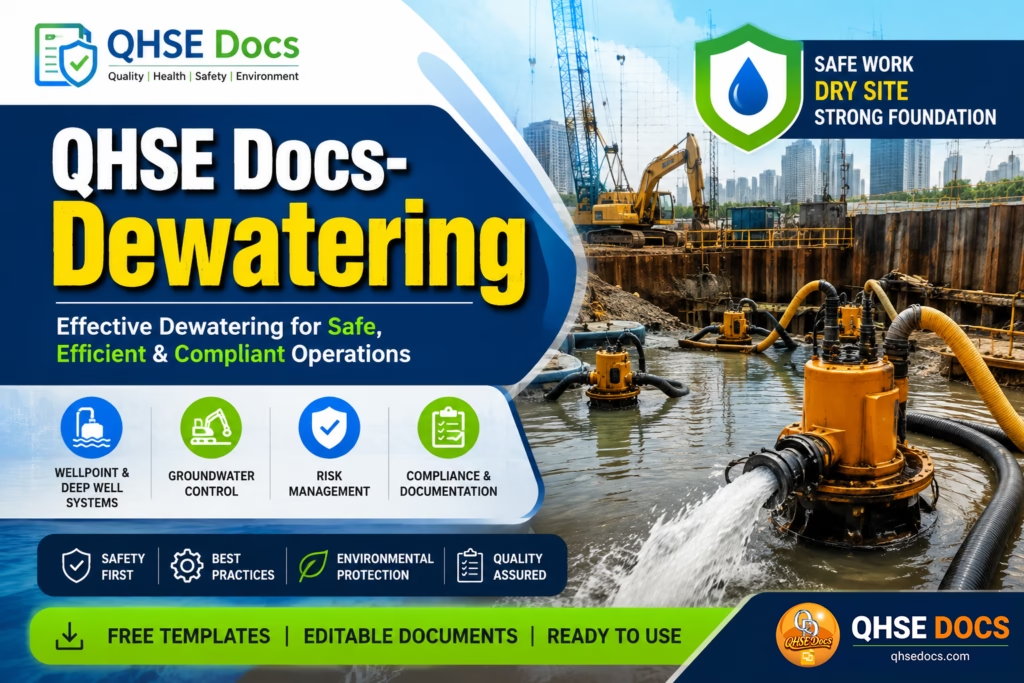
Choosing a Dewatering Method
The right method depends on soil type, water table depth, and how close the excavation sits to existing structures. A method statement should justify the chosen approach rather than assume it.
- Sump pumping — water collects in a pit at the low point of the excavation and is pumped out. Suited to shallow works in low-permeability soils where inflow is modest.
- Wellpoint systems — a ring of shallow wells connected to a header pipe draws the water table down before excavation starts. Common on sandy or silty soils where sump pumping alone would destabilise the sides.
- Deep well or eductor systems — used where the drawdown needed is too great for wellpoints, typically on deeper basements or in higher-permeability ground.
- Cut-off methods (sheet piling, slurry walls) — used instead of, or alongside, pumping where continuous drawdown would risk settlement of nearby structures.
A short geotechnical basis for the selection — even a paragraph referencing the site investigation report — is what separates an audit-ready method statement from a generic one
What the Method Statement Should Actually Cover
Beyond the standard headers (scope, responsibilities, PPE, emergency arrangements), a dewatering-specific method statement needs to walk through the activity in sequence:
- Pre-start checks: services scan, confirmation of discharge point and consent, inspection of pumps, hoses, and generators
- Installation sequence for wellpoints, sumps, or wells, including spacing and depth
- Start-up and drawdown monitoring — how water levels and settlement will be tracked, and by whom
- Discharge routing: silt traps or settlement tanks before water leaves the site boundary
- Ongoing operation: shift handover, fuel/power checks, noise control for diesel pumps running overnight
- Shutdown and demobilisation, including backfilling of wellpoint holes and reinstatement
- Contingency steps for pump failure, sudden inflow, or loss of drawdown
Permits and Approvals to Line Up Beforehand
Dewatering rarely runs on a single permit. Depending on the project and jurisdiction, expect to coordinate:
- An excavation permit covering the wider works, cross-referenced to the dewatering activity
- A separate dewatering or “hot works adjacent” style permit where pumps and generators are involved
- A discharge consent or NOC from the local authority (e.g., municipality trade effluent approval) before any water leaves site
- Utility clearance confirming no live services sit within the wellpoint or well drilling zone
On UAE projects this typically means aligning the method statement with ADOSH-SF excavation and groundwater provisions alongside the relevant municipality’s discharge requirements — approvals that can take longer to secure than the dewatering works themselves, so they’re worth starting early.
Roles and Competency
A method statement is only as strong as the people named in it. Auditors typically expect to see a named dewatering supervisor responsible for monitoring drawdown and water quality, a competent electrician or technician for pump and generator checks, and a clear line for who has authority to stop works if drawdown or discharge readings move outside agreed limits.
Documents That Should Sit Alongside the Method Statement
- Site-specific risk assessment covering geotechnical, electrical, and environmental hazards
- Daily pump, hose, and discharge point inspection checklist
- Drawdown and settlement monitoring log
- Discharge water quality test records
- Toolbox talk record confirming the crew understands the sequence and emergency actions
Key Takeaways
- Dewatering needs its own method statement, not a paragraph inside the general excavation document
- The method chosen (sump, wellpoint, deep well, cut-off) should be justified against ground conditions, not assumed
- Permits for dewatering and discharge are usually separate from the general excavation permit
- Monitoring drawdown and discharge quality throughout the works is what keeps residual risk manageable
- Named, competent roles for supervision and shutdown authority belong in the document, not just in theory
Frequently Asked Questions
What’s the difference between sump pumping and wellpoint dewatering?
Sump pumping collects water at a low point within an already-open excavation and pumps it out, while wellpointing lowers the water table in advance using a ring of shallow wells, which reduces the risk of unstable excavation sides in permeable soils.
Does a dewatering method statement need its own risk assessment?
Yes. The method statement describes the sequence of work; a linked risk assessment evaluates the geotechnical, electrical, and environmental hazards specific to that sequence and the controls in place for each.
Who should sign off on the dewatering method chosen for a project?
The method should be justified with reference to the site’s geotechnical data and typically requires sign-off from the temporary works engineer or designer, in addition to the HSE team.
Can dewatering water be discharged straight into a stormwater drain?
Generally no. Most authorities require settlement or filtration first, along with a formal discharge consent, before water leaves the site boundary into public drains or waterways.
Building out your dewatering documentation package? Browse editable Method Statements, Risk Assessments, and HSE Checklists on QHSE Docs.