


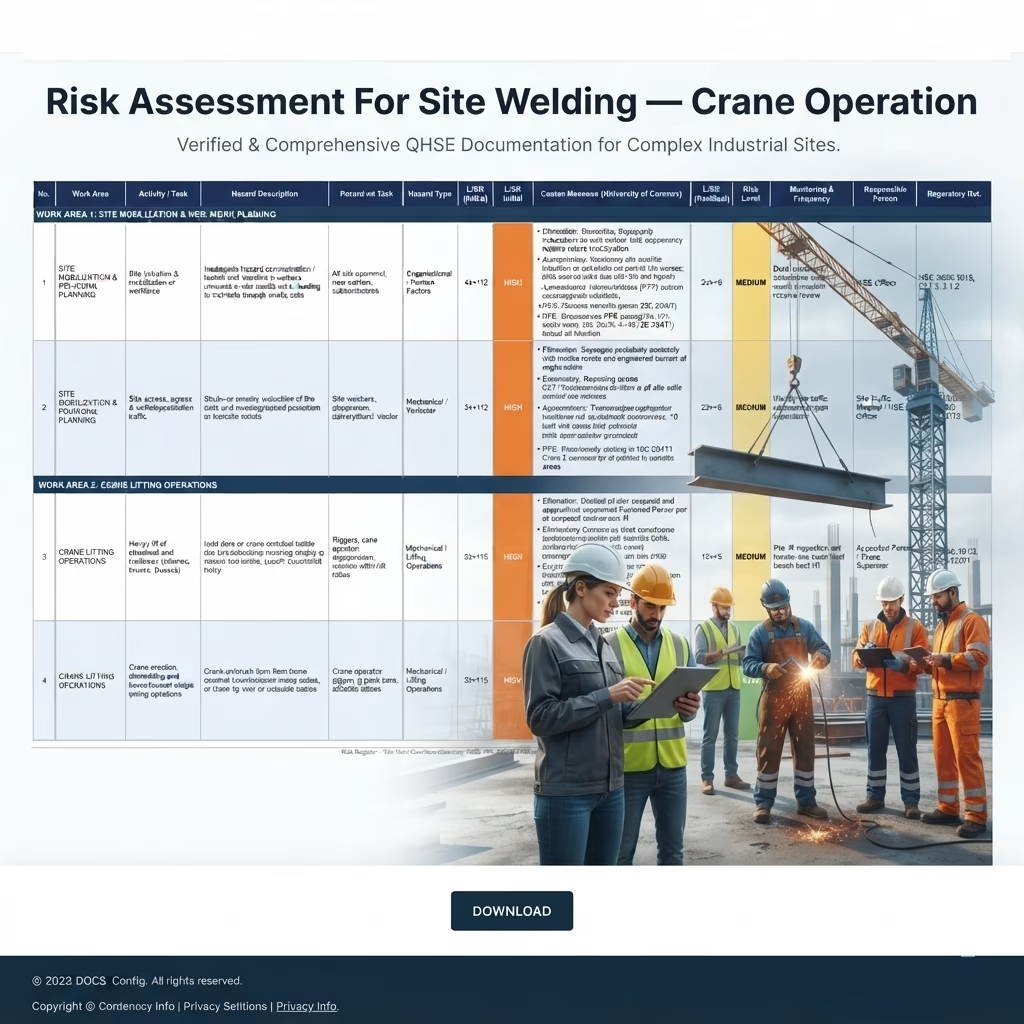
This risk assessment for site welding — crane operation helps teams manage two high-risk activities that often happen side by side. It covers hot work hazards, lifting hazards, and the exclusion zones needed to keep both tasks apart. As a result, supervisors can plan welding and crane work on the same site with confidence.
Why This Risk Assessment For Site Welding — Crane Operation Matters
Welding produces sparks, arc flash, and fume, while crane operation involves suspended loads and swing radius. However, when both activities run near each other, sparks near rigging or a load path crossing a welding bay can quickly become serious. Therefore, this document treats welding and crane operation as one combined hazard picture, not two separate tasks.
What’s Included in the Risk Assessment
- Hazard identification table covering welding, hot work, and crane lifting
- Risk scoring matrix with likelihood, severity, and residual risk ratings
- Control measures for PPE, fire watch, exclusion zones, and banksman signalling
- Roles and responsibilities for welders, riggers, crane operators, and QHSE officers
- Permit-to-work and lift plan cross-reference section
- Sign-off and approval page for site authorisation
Who Needs This Document
QHSE officers, HSE managers, site supervisors, and mechanical or steel contractors all rely on this document. In particular, teams fabricating steelwork, erecting structures, or handling loads near hot work need a clear, combined risk assessment. In addition, subcontractors can adapt it quickly for their own welding and lifting scopes.
Compliance and Standards
This risk assessment reflects internationally recognised good practice for welding and crane work. For example, it draws on the fabrication principles set out in AWS D1.1, Structural Welding Code – Steel. Furthermore, it aligns with crane safety expectations similar to those in OSHA’s Cranes and Derricks in Construction standard. Consequently, teams can also reference the BS 7121 Code of Practice for the Safe Use of Cranes alongside their own ISO 45001 and ISO 9001 procedures.
How to Use and Edit This Document
Open the file in Microsoft Word and update the project name, location, and equipment details. Next, adjust the hazard and control tables to match your welding processes and crane types. Finally, route the document through your normal review and approval workflow before issuing it to site.
Related QHSE Documents
Pair this risk assessment with other lifting and site safety documents from QHSE Docs. For instance, teams often use the risk assessment for lorry loader lifting for smaller crane-assisted deliveries. Similarly, the job safety and environment analysis for scaffolding installation, erection and dismantling supports crews working near lifting zones. Additionally, Risk Assessment for Lorry Loader Lifting covers the Lorry Loader Lifting.
Download this editable risk assessment today and give your team a ready-to-use document for combined site welding and crane operation. Get instant access in Microsoft Word (.docx) format and start protecting your crew on the next shift.
FAQ’s
Q1: What does this document include?
A1: This risk assessment for site welding — crane operation includes a hazard table, a likelihood-severity risk matrix, control measures, and a sign-off page. It covers hot work, fire watch, exclusion zones, and lifting checkpoints.
Q2: Is it compliant with relevant standards?
A2: Yes. The document reflects good practice found in AWS D1.1 for structural welding, OSHA’s cranes and derricks standard, and BS 7121 for crane safety, giving your combined welding and lifting process a strong compliance foundation.
Q3: What format is the file?
A3: The file is Microsoft Word (.docx), fully editable for your project details and scope. Teams can adapt this risk assessment for site welding — crane operation to any site or contract quickly.
Q4: Who should use this document?
A4: QHSE officers, HSE managers, site supervisors, and steel or mechanical contractors should use this document. It suits anyone planning, supervising, or inspecting welding work carried out near crane lifting operations.
Q5: How quickly can I download it?
A5: Downloads are instant after checkout. You receive the editable Word file straight away, so your team can start customising the document and begin combined welding and lifting risk planning the same day.
Q6: Can I customise the template?
A6: Yes. Open the Word file, edit hazard entries, risk scores, and control measures, then insert your project and company details. The layout stays simple, so customisation takes minutes, not hours.