


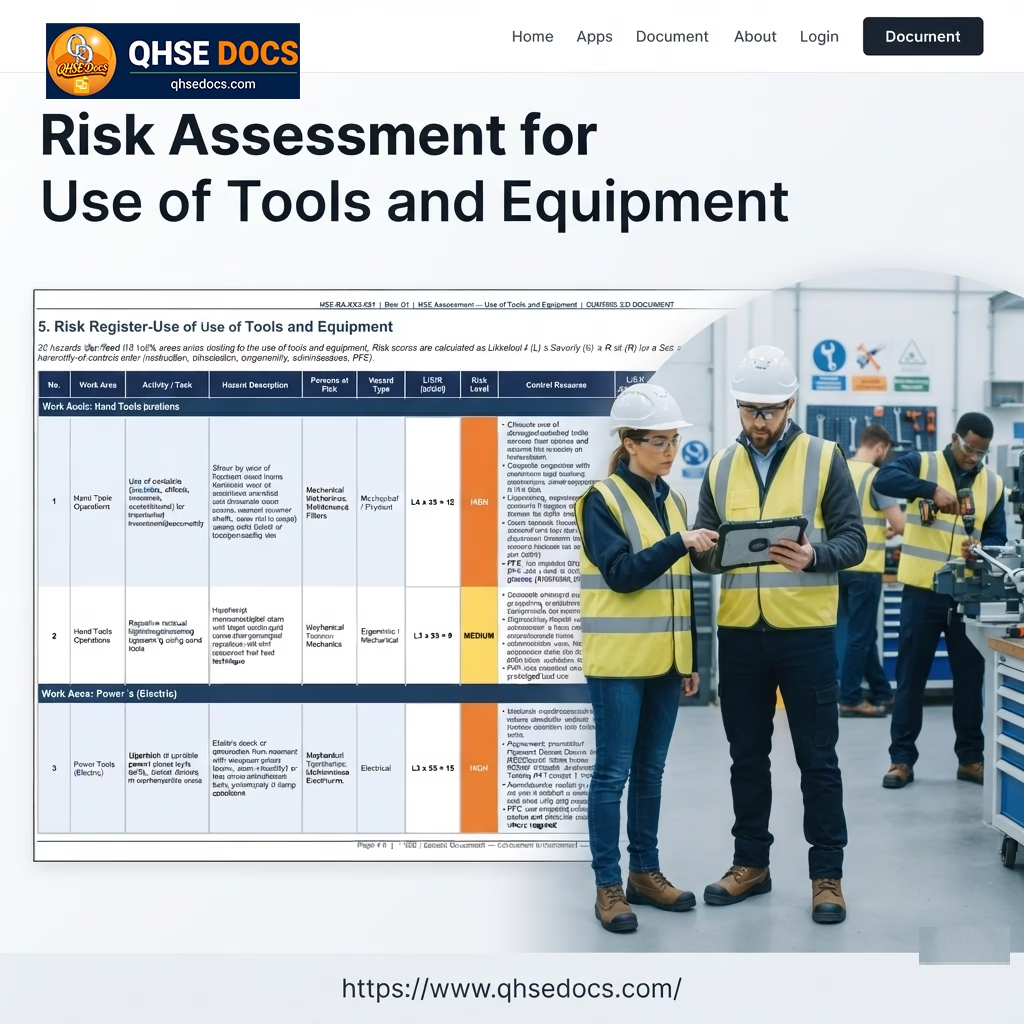
Risk Assessment for Use of Tools and Equipment: Document Overview
This risk assessment for use of tools and equipment helps teams spot hazards before tools go into service. It covers hand tools, power tools, and site equipment used across electrical and instrumentation projects. As a result, supervisors gain a practical tool for controlling everyday equipment risks on site.
What’s Included in the Risk Assessment for Use of Tools and Equipment
The document breaks equipment use into clear hazard and control tables for every task. For example, it addresses cuts, entanglement, electric shock, noise, and vibration hazards. In addition, it lists inspection, maintenance, and PAT testing requirements for powered tools.
- Hazard identification for hand tools, power tools, and portable equipment
- Risk rating tables with likelihood, severity, and residual risk scores
- Control measures for electrical safety, guarding, and PPE use
- Pre-use inspection and PAT testing checklist references
- Maintenance and storage guidance for site equipment
- Emergency response steps for tool-related incidents
Who Needs This Document
QHSE officers, HSE managers, and site supervisors rely on this risk assessment for daily toolbox talks. Contractors and subcontractors also use it to prove compliance before supervisors issue work permits. Furthermore, electrical and instrumentation technicians reference it when handling test equipment and hand tools.
Compliance Standards for Tools and Equipment
This risk assessment for use of tools and equipment aligns with international QHSE management expectations. It reflects the occupational health and safety principles of ISO 45001 and the quality management approach of ISO 9001. Moreover, it reflects control measures set out in the UK’s Provision and Use of Work Equipment Regulations, known as PUWER. Site teams operating in the United States can also cross-reference OSHA 1910 Subpart P on hand and power tools. For electrical equipment specifically, teams should consult IEC 60204-1 on the electrical safety of machinery.
How to Use and Edit This Risk Assessment
Download the file and open it in Microsoft Word right away. Then, replace the project details, site name, and equipment list with your own information. You can adjust risk ratings, add site-specific controls, or insert your company branding. As a result, the document matches your exact tools and equipment within minutes.
Related QHSE Resources
Pair this risk assessment for use of tools and equipment with other site safety documents. For instance, our risk assessment for electric shock covers related hazards from powered tools and leads. Meanwhile, the risk assessment for use of cartridge operated tools addresses a specific high-risk tool category. Finally, the method statement for installation of uninterruptible power supply supports safe electrical equipment handling on UPS projects.
Download this risk assessment for use of tools and equipment today and equip your team with a compliant safety document. Get instant access to the Microsoft Word (.docx) file and start managing tool and equipment risks now.
FAQ’s
Q1: What does this document include?
A1: This risk assessment for use of tools and equipment covers hazard identification, risk ratings, control measures, and PAT testing guidance for hand and power tools.
Q2: Is it compliant with relevant standards?
A2: Yes. The document aligns with ISO 45001 and ISO 9001 principles and reflects control measures found in PUWER 1998 and OSHA 1910 Subpart P for tools and equipment.
Q3: What format is the file?
A3: The risk assessment for use of tools and equipment comes as a fully editable Microsoft Word (.docx) file, ready to customise after instant download.
Q4: Who should use this document?
A4: QHSE officers, HSE managers, site supervisors, and contractors use this document to plan safe tool and equipment use and support toolbox talks.
Q5: How quickly can I download it?
A5: You get instant access after checkout. The risk assessment for use of tools and equipment downloads immediately as an editable Word file.
Q6: Can I customise the template?
A6: Yes, fully. Every section of the risk assessment for use of tools and equipment is editable, so you can add site-specific hazards and controls.