


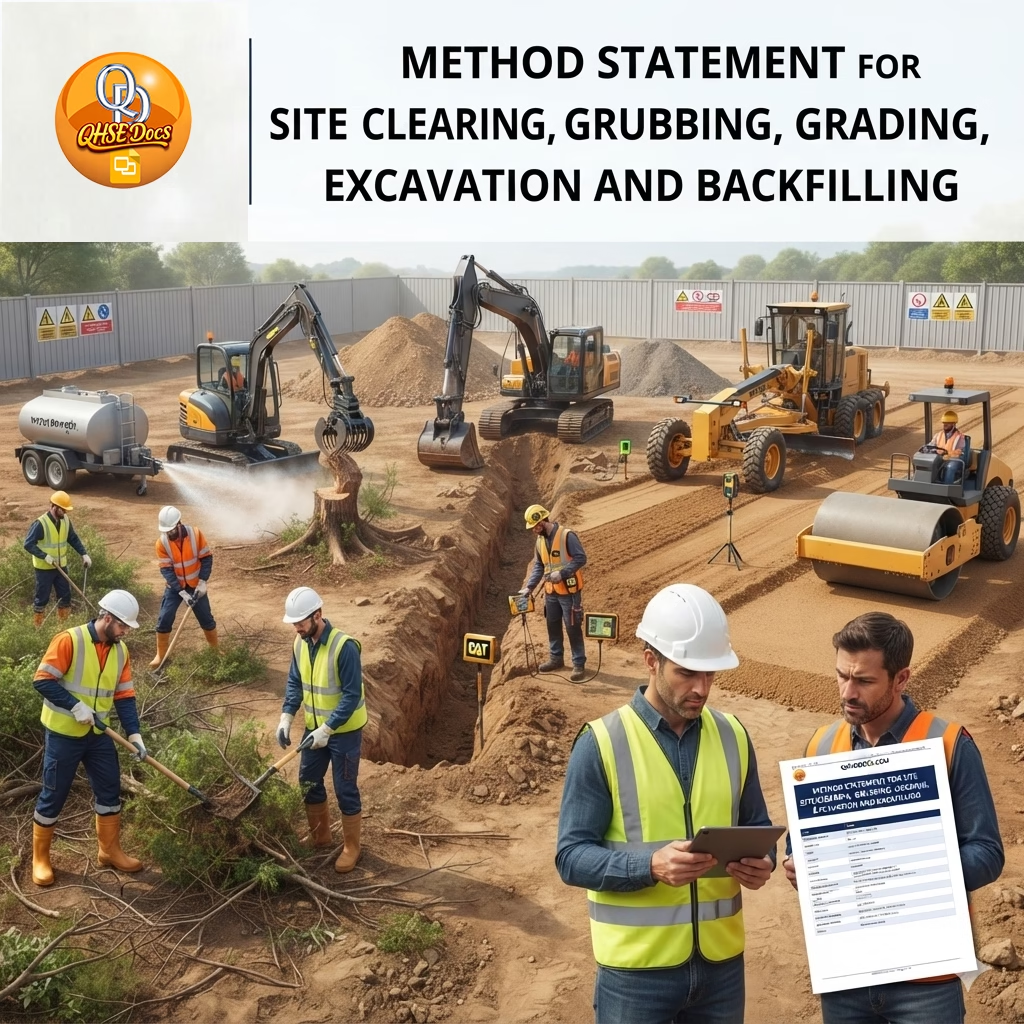
Site clearing, grubbing, grading, excavation and backfilling forms the foundation stage of almost every construction project. This editable method statement guides your team through each step, from vegetation removal to final compaction. As a result, site teams follow one consistent, auditable procedure from day one.
What’s Included in This Site Clearing, Grubbing, Grading, Excavation and Backfilling Method Statement
This document breaks the works into clear, sequential stages. In addition, it links each activity to its own hazard and control measures. The file includes:
- Scope of work and project references
- Site clearing and grubbing sequence, including vegetation and debris removal
- Grading and levelling procedures with survey checkpoints
- Excavation methodology, including trench and bulk-dig guidance
- Backfilling and compaction requirements, layer by layer
- Roles and responsibilities matrix
- Hazard identification and risk control table
- PPE, plant, and equipment requirements
- Emergency response and environmental controls
Who Needs This Document
QHSE officers use this method statement to standardise earthworks documentation across sites. Similarly, HSE managers rely on it to demonstrate due diligence during audits. Site supervisors and contractors also need it, because it sets out the safe sequence of work before machinery mobilises. Therefore, it suits main contractors, subcontractors, and consultants working on greenfield or brownfield sites.
Compliance Standards
This method statement is built for International / Global projects and aligns with widely recognised occupational health and safety frameworks. Consequently, it supports your project’s compliance obligations rather than replacing your own risk assessment process. Specifically, the structure reflects the excavation safety principles set out in OSHA 29 CFR 1926 Subpart P for excavations, the UK HSE’s HSG47 guidance on avoiding danger from underground services, and the risk-management approach of ISO 45001:2018 for occupational health and safety management. As a result, teams can adapt the document to local regulations while keeping a globally recognised safety structure.
How to Edit and Use This Method Statement
First, open the file in Microsoft Word and insert your project name, dates, and site details. Next, review each stage of the site clearing, grubbing, grading, excavation and backfilling sequence against your actual scope. Then, update the risk assessment table with site-specific hazards. Finally, circulate the document for approval before work begins, so every stakeholder signs off on the same procedure.
For related civil works, see our Excavation Earthwork Inspection Checklist, our Asbestos Demolition Works QHSE Documents Package, and our Method Statement for Installation of Drainage Pipes, which covers trenching and backfilling for underground services.
Ready to standardise your earthworks documentation? Download the site clearing, grubbing, grading, excavation and backfilling method statement now and give your team an editable, audit-ready procedure in minutes.
FAQ’s
Q1: What does this document include?
A1: The document covers the full site clearing, grubbing, grading, excavation and backfilling sequence, including hazard controls, roles, PPE requirements, and compaction procedures for every stage of earthworks.
Q2: Is it compliant with relevant standards?
A2: Yes. It reflects excavation safety principles from OSHA 1926 Subpart P, HSE HSG47, and ISO 45001, giving International / Global projects a globally recognised compliance structure.
Q3: What format is the file?
A3: The site clearing, grubbing, grading, excavation and backfilling method statement is delivered as an editable Microsoft Word (.docx) file, ready to customise and print.
Q4: Who should use this document?
A4: QHSE officers, HSE managers, site supervisors, and civil contractors use this document to plan and approve earthworks safely before excavation begins on site.
Q5: How quickly can I download it?
A5: Once you buy the site clearing, grubbing, grading, excavation and backfilling method statement, you receive instant access to download the file straight away.
Q6: Can I customise the template?
A6: Yes. Because it’s a fully editable Word file, you can update scope, hazards, and site details to match your specific project quickly.