Description
A method statement for crane lifting operations gives your team a clear, sequential plan for planning, rigging, and executing crane lifts safely. It covers roles, equipment checks, and exclusion zones, so every lift proceeds under control. As a result, site supervisors and HSE officers get one document that ties methodology directly to compliance.
What This Method Statement for Crane Lifting Operations Covers
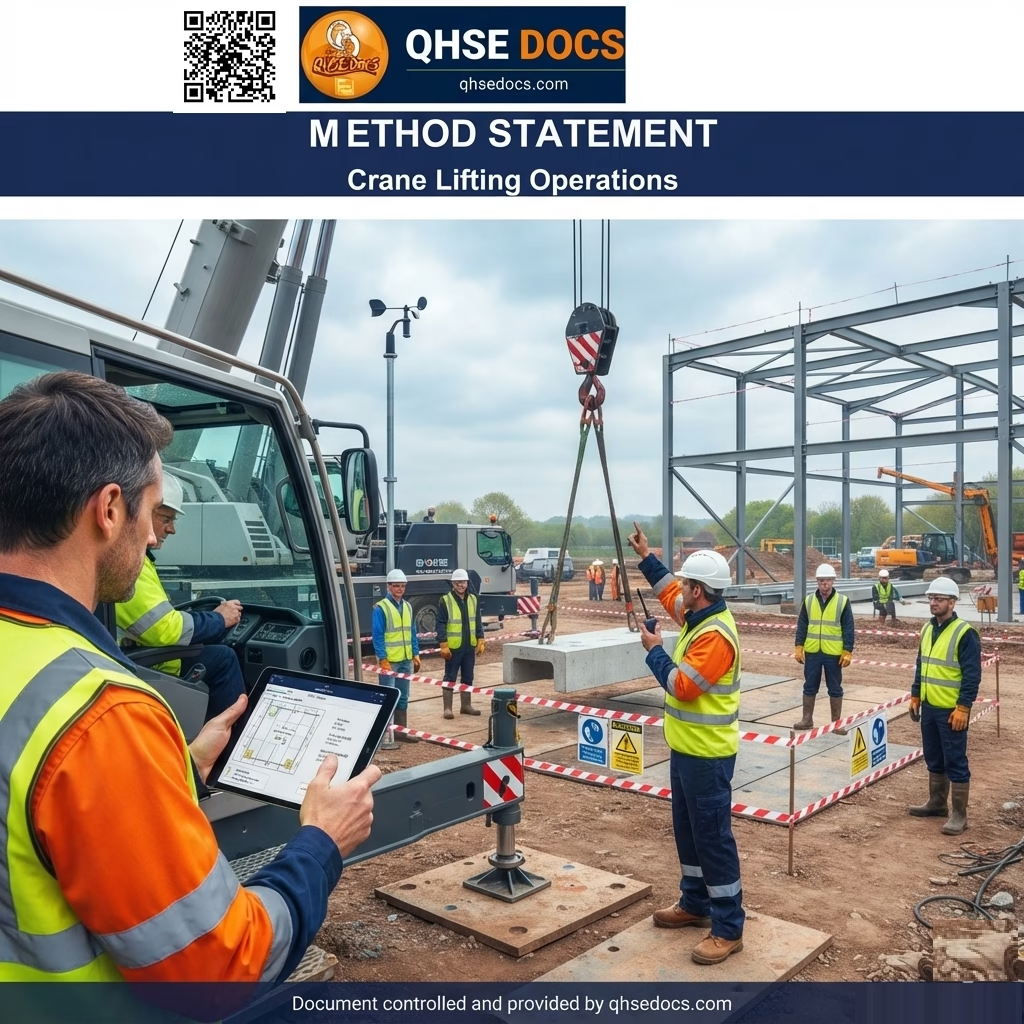
This document walks through every stage of the lifting cycle, from lift planning to load landing. It also defines roles, tools, and sequencing, so crews always know what happens next. In particular, it addresses ground bearing checks, rigging inspection, and exclusion zone control. Consequently, teams reduce the risk of dropped loads and avoid costly delays caused by unclear instructions.
- Purpose, scope of work, and reference to the approved lift plan and drawings
- Roles and responsibilities for the appointed person, lift supervisor, and signaller
- Tools, plant, and equipment checklist, including slings, shackles, and rigging gear
- Step-by-step sequence for site setup, rigging, lifting, and load landing
- Health, safety, and environmental controls specific to crane and lifting activities
- Quality control checkpoints, inspection records, and approval and sign-off documentation
Key Hazards and Controls Addressed
Dropped loads, crane overturn, and contact with overhead power lines account for many incidents during lifting operations. This document addresses each of these hazards directly, alongside ground bearing capacity, wind speed limits, and exclusion zone breaches. For example, it sets clear hold points before every lift, so supervisors confirm ground conditions and rigging integrity before the crane takes the load. It also specifies PPE requirements, communication protocols between signaller and operator, and procedures for suspended loads over occupied areas. In addition, it covers emergency response steps for a dropped load or a crane instability event.
Who Needs This Document
QHSE officers, HSE managers, and site supervisors all rely on a documented method for lifting work. Contractors and subcontractors also use it to brief operatives before mobilisation. Therefore, any team planning crane lifts, tandem lifts, or critical lifts benefits from having this reference on hand. In addition, procurement and tender teams often attach it to bid submissions as evidence of a planned approach.
Compliance Standards
The content aligns with recognised international lifting practice, including BS 7121, the Code of Practice for the Safe Use of Cranes. It also reflects the operator and rigging requirements set out in OSHA 29 CFR 1926 Subpart CC, alongside guidance from ASME B30.5, the safety standard for mobile and locomotive cranes. Furthermore, it supports management-system alignment with ISO 45001 and ISO 9001 for teams building an integrated QHSE programme. Overall, this gives clients and auditors confidence that the lifting methodology meets accepted global benchmarks.
How to Use and Edit the Method Statement
Open the file in Microsoft Word, then replace the bracketed placeholders with your project name, location, and personnel details. After that, adjust the sequence of work to match your actual crane type and lift plan. Because the document is fully editable, you can add project-specific hazards or attach your own risk assessment.
For related lifting work, review our method statement for lifting of pipes, or cover elevated access equipment with our risk assessment for use of a Genie lift. If your scope also involves positioning MEP components once the lift is complete, our method statement for anchors, hangers and supports installation covers that adjacent activity. These related documents share the same clear format, so your QHSE library stays consistent across every activity.
Download this method statement for crane lifting operations now and give your team an editable, standards-aligned procedure in minutes. Get instant access in Microsoft Word (.docx) format, and start customising it for your next project today.
FAQ’s
Q1: What does this document include?
A1: This method statement for crane lifting operations includes scope of work, roles, equipment lists, a step-by-step rigging and lifting sequence, HSE controls, and QC approval sections, all editable in Word.
Q2: Is it compliant with relevant standards?
A2: Yes. The content reflects BS 7121, OSHA 29 CFR 1926 Subpart CC, and ASME B30.5, and it supports ISO 45001 and ISO 9001 alignment for global projects.
Q3: What format is the file?
A3: The method statement for crane lifting operations downloads as a Microsoft Word (.docx) file, formatted on A4 paper. You can edit every section freely and print it for site use.
Q4: Who should use this document?
A4: QHSE officers, HSE managers, site supervisors, and civil contractors managing crane mobilisation, rigging, or lifting activities all benefit from standardising their procedures with it.
Q5: How quickly can I download it?
A5: Downloads are instant after purchase. You receive the editable file immediately, so you can start customising your lift plan and procedure without delay.
Q6: Can I customise the template?
A6: Yes, every section is fully editable. Replace the placeholders with your project details, add site-specific hazards, and adjust the sequence to match your crane type.